Quantitative fisheries science

Projects

Statistical methods, assessment models, and practical decision tools for sustainable fisheries and marine ecosystems.

Science for better marine decisions

My work connects data, statistical modelling, and fisheries management. Projects range from focused analyses to full stock assessments, management strategy evaluation, ecological risk assessment, and the software needed to make complex science useful.

From difficult questions to usable evidence

Three examples of Quantifish turning complex data and modelling problems into practical capability for assessment, management, and conservation.

01

International stock assessment

Modernising the southern bluefin tuna operating model

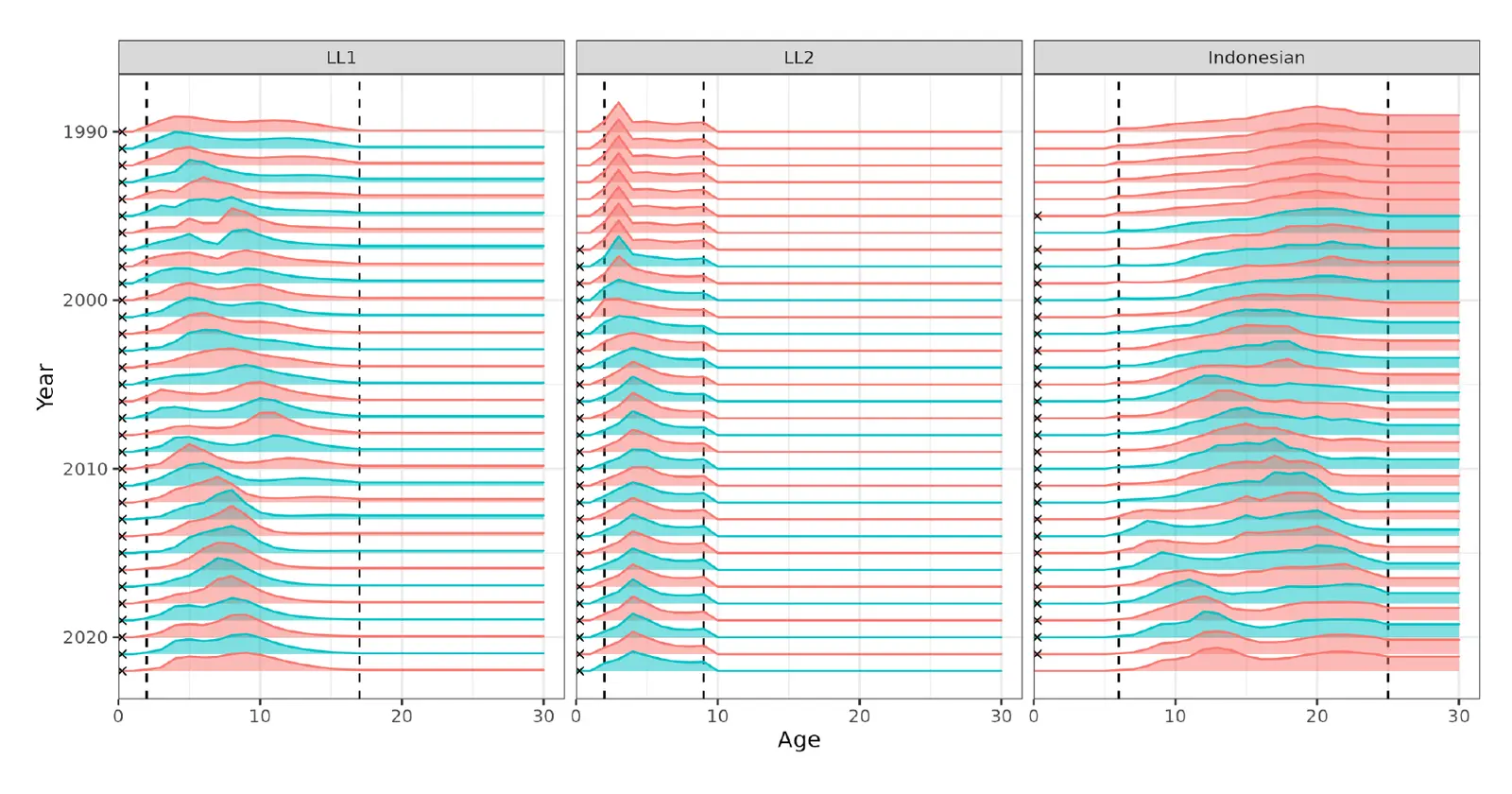
Time-varying GMRF selectivities by year for the LL1, LL2, and Indonesian southern bluefin tuna fisheries
Time-varying GMRF selectivities for the LL1, LL2, and Indonesian fisheries; dashed lines mark the estimated age ranges and colours show selectivity blocks. CCSBT-ESC/2409/11, Figure 14. Open full-size figure.
Management problem
The legacy operating model made assumptions difficult to communicate, uncertainty grids cumbersome to revise, and new assessment hypotheses costly to implement.
Quantifish contribution
Rebuilt the model in modern RTMB software, validated it against the existing implementation, and developed clearer, more flexible likelihood and population-dynamics components.
Result
CCSBT participants gained a transparent, extensible platform for stock assessment, uncertainty analysis, and future management procedure evaluation.
02

Ecological risk assessment

Identifying the threats that matter most for hoiho

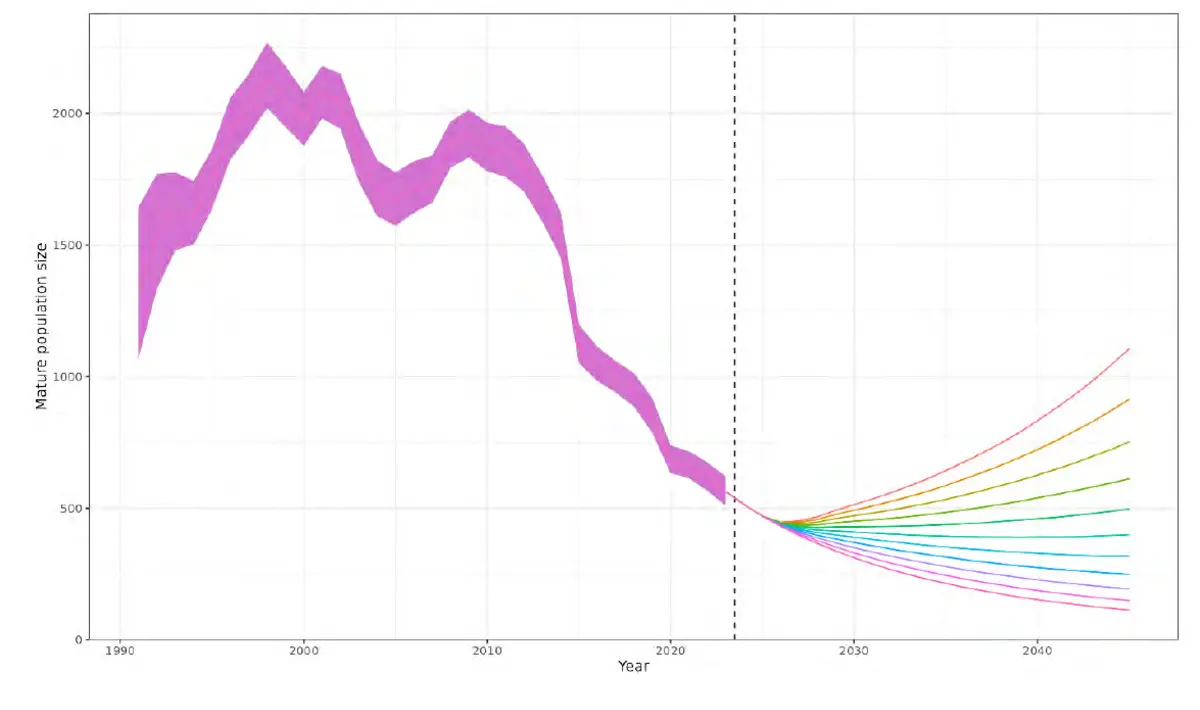
Projected mature hoiho population under alternative reductions in juvenile mortality
Projected mature population under alternative reductions in juvenile mortality; projections begin at the dashed line. AEBR 370, Figure 11. Open full-size figure.
Management problem
Hoiho were declining across their northern range, but the effects of multiple marine and terrestrial threats differed by place and life stage.
Quantifish contribution
Co-developed regional demographic models, a spatial fisheries risk assessment, threat-overlap layers, and projections that tested where reducing mortality could change the trajectory.
Result
The assessment identified poor juvenile and adult survival as the central demographic constraint and showed that halving deaths in either group could stabilise the population—sharpening conservation priorities.
03

Domestic stock assessment

Reassessing CRA 2 with the lobster stock dynamics model

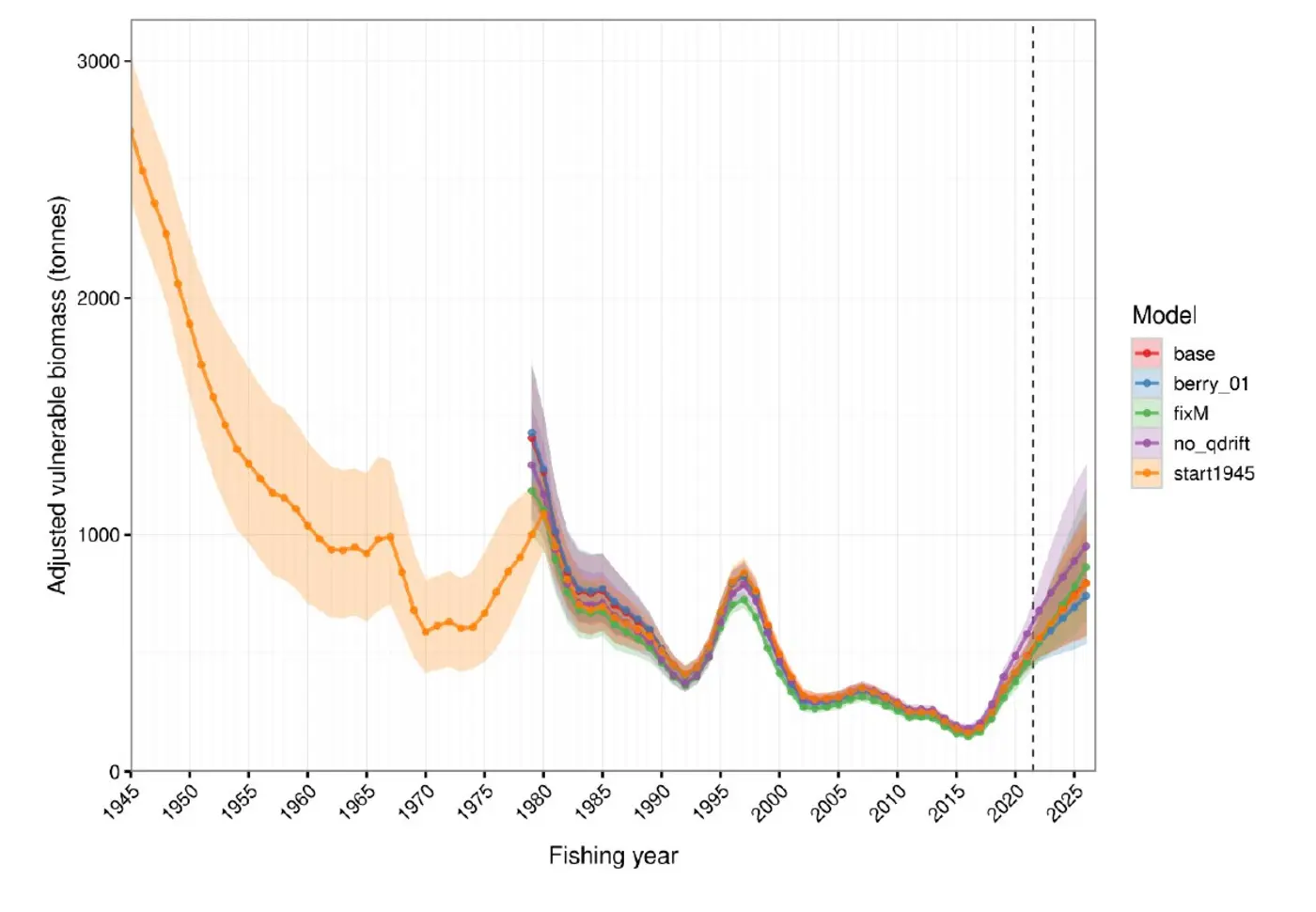
CRA 2 adjusted vulnerable biomass across the base case and key sensitivity models from 1945 through the projection period
CRA 2 adjusted vulnerable biomass for the base case and key sensitivities, with projections beyond the dashed line. FAR 2023/43, Figure 66. Open full-size figure.
Management problem
The 2017 assessment placed CRA 2 below the soft limit, triggering a rebuild. Managers needed an updated, peer-reviewed view of stock status after catch reductions and improved recruitment.
Quantifish contribution
Helped develop and apply the LSD model to CPUE, length frequency, sex-ratio, and tag-recapture data, with Bayesian inference and sensitivity testing overseen by the Rock Lobster Working Group.
Result
The assessment was approved by the Fisheries New Zealand Plenary and estimated CRA 2 above its reference level, providing an agreed evidence base for subsequent management advice and rapid updates.

Expanded case-study figure

Explore all publications & reports.

Search 93 publications

Have a fisheries science problem to solve?

How to get in touch