Plot the completeness of variables through time
Source:R/additional-diagnostics.R
plot_data_extent.RdPlot the completeness of variables through time
Details
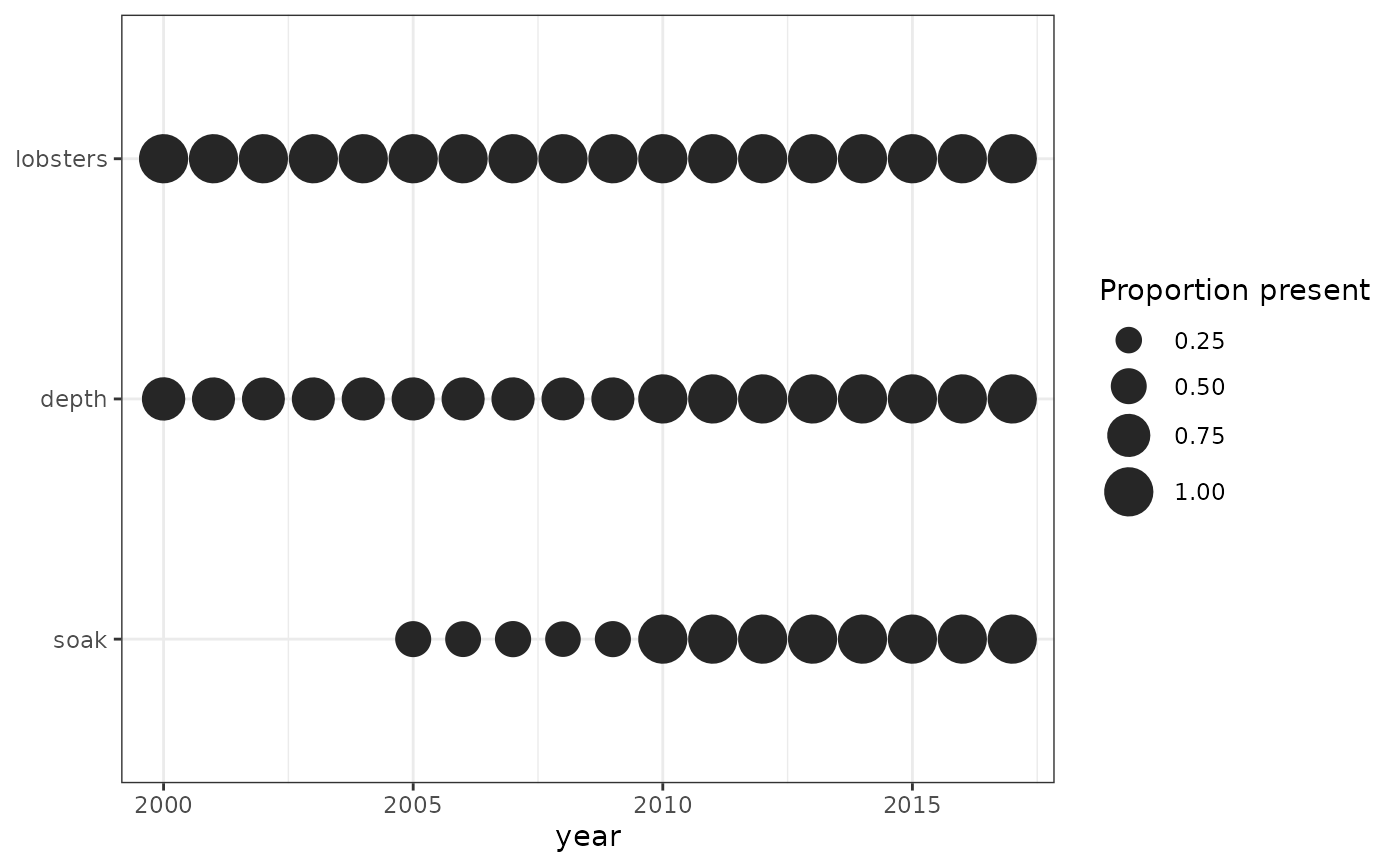
For each variable and observed time level, dark bubble area represents the proportion of records whose value is not `NA`. A zero response is an observed value, not missing data. Cells with zero completeness are blank. Records with a missing `xvar` are excluded. Completeness is calculated separately for each variable among the records supplied; it is not sampling intensity, measurement accuracy, or the proportion of joint complete cases across all selected variables.
Examples
data(lobsters_per_pot)
coverage_example <- lobsters_per_pot
example_year <- as.integer(as.character(coverage_example$year))
record_number <- seq_len(nrow(coverage_example))
coverage_example$soak[example_year < 2005] <- NA_real_
coverage_example$soak[
  example_year >= 2005 & example_year < 2010 & record_number %% 2 == 0
] <- NA_real_
coverage_example$depth[
  example_year < 2010 & record_number %% 4 == 0
] <- NA_real_
plot_data_extent(coverage_example, "year", c("lobsters", "depth", "soak"))